

The Yellowstone River flows approximately 692 miles through Montana before joining the Missouri River in North Dakota, making it the longest undammed river in the 48 continental states.
The waterway travels north and then east through high volcanic plateaus, deep canyons, and broad valleys. The diverse geology delivers a steady supply of river-tumbled rocks to gravel bars throughout much of its course.
While collecting is strictly prohibited within Yellowstone National Park, many areas outside the national park offer excellent rock-collecting opportunities. Montana’s public stream access laws allow the public to walk below the high-water mark on any navigable river, opening miles of gravel bars for exploration.
Access to the riverbank must be through one of the public sites managed by Bureau of Land Management (BLM), U.S. Forest Service (USFS), or Montana Fish, Wildlife & Parks (MFWP).
🔵 If the access point is a Designated Site managed by MFWP, a Montana conservation or fishing license is required for any recreational activities.

Yellowstone River Geology
The Yellowstone River drains one of the most volcanically active regions in North America. Over tens of millions of years, intense volcanic activity in what is now Yellowstone National Park produced vast lava flows and ash deposits. As these materials cooled, silica-rich water filled cavities, gas pockets, and even molds of buried tree limbs. Over time, this silica hardened into agate, jasper, and petrified wood.
For thousands of years, the river has eroded these ancient volcanic formations, carrying and tumbling the material downstream. After leaving Yellowstone National Park, the river flows through a dramatically different landscape.
Moving north and east across Montana, it cuts through sedimentary formations, sandstone cliffs, shale beds, and ancient river deposits.
These layers add new material to the gravel bars, including iron-stained stones, fossil-bearing rocks, and additional varieties of agate and jasper.
By the time the river reaches the plains east of Billings toward Miles City and Glendive, the combination of volcanic and sedimentary sources creates an especially diverse mix of river-tumbled specimens.

Yellowstone River Rockhounding
The Yellowstone River gravels hold a diverse mix of collectible stones born from volcanic landscapes and polished smooth by thousands of years of river tumbling.
Montana Moss Agate is the most sought-after find along this river. These translucent stones range from clear to milky white and often contain red, brown, blue, or black dendritic inclusions that create landscape-like patterns when cut and polished. The best concentrations are typically found east of Billings toward Miles City and Glendive, roughly 150 to 250 miles downstream from Yellowstone National Park.
Petrified wood is common throughout the river corridor, often in smaller pieces with visible wood grain patterns.
Jasper appears in red, yellow, and brown varieties, often as fist-sized cobbles among the gravels. Clear and smoky quartz are found regularly, along with translucent chalcedony in various colors.
Obsidian, volcanic glass transported downstream from Yellowstone’s volcanic features — can also be found in smaller fragments.
Rare pieces of nephrite jade occasionally appear in the gravels as well.
Most collecting is done by walking gravel bars and picking by hand. Spotting agate takes practice, as these stones often have dull outer crusts that resemble ordinary river rock. Holding a suspect stone up to sunlight reveals its translucency — one of the key signs of a good find. A bucket and sand dipper are usually the only tools collectors need.

Things to do at Yellowstone River: Exploring the Area
Outdoor adventures along the Yellowstone River include rafting through scenic stretches, fishing for native trout, hiking amidst pristine landscapes, and spotting wildlife in their natural habitats.
Yellowstone National Park is where you can explore geological wonders, including the iconic Mammoth Hot Springs terraces, the colorful Grand Prismatic Spring, Porcelain Basin, West Thumb Geyser Basin, and other natural landmarks.
There are several hot spring resorts in the area where you can relax and soak, including Yellowstone Hot Springs, Bozeman Hot Springs, and Chico Hot Springs.
South Umpqua River Rockhounding | Facts
Material: Montana agate, jasper, petrified wood, quartz, chalcedony, obsidian, nephrite jade
Tools: Bucket, Sand Dipper Square Scoop
Land type: River gravel bars below the high-water mark
Best time to visit: Late summer through early fall (July–September, after spring runoff)
Land manager: Montana Fish, Wildlife & Parks (MFWP), Bureau of Land Management (BLM), U.S. Forest Service (USFS)
Fees: Montana conservation or fishing license required at designated FWP sites
Location: Gardiner to North Dakota border • Montana • USA
Road access: Any vehicle
Yellowstone River Camping and Lodging
Eagle Rock Campground, 0.5 miles from Gardiner, has sites for tents and small RVs, as well as picnic tables and fire rings.
Gardiner and Livingston serve as a convenient base for exploring the upper Yellowstone River. The towns feature motels, vacation rentals, and restaurants.
You May Also Like


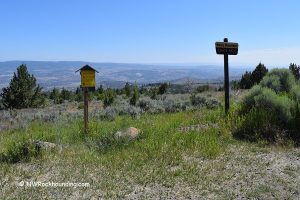
Yellowstone River Public Access Sites
Several public recreation and fishing access sites provide legal entry points to the river and productive gravel bars. You may also search near bridges if a legal roadside pullout and a trail to the river are available.
Always enter through a designated public access point. If accessing through Montana State Trust Lands or certain designated sites, be sure to hold a valid Montana conservation or fishing license as required.
Yankee Jim Picnic Area: N 45°10.074' W 110°51.303' | 45.168, -110.855
Carter Bridge Fishing Access (Livingston Area): N 45°35.867' W 110°33.923' | 45.598, -110.565
Far West Fishing Access (Rosebud Area): N 46°16.812' W 106°29.121' | 46.28, -106.485