
From the beaches of the Oregon Coast to the volcanic plateaus of eastern Oregon, the state is a rockhounding paradise with unique geology to explore. Because public and private lands are managed under different rules, it’s important to know what is allowed in each area.
Rock collecting in Oregon depends on the location and may be regulated by federal, state, or local laws.
For an overview of general regulations on federal lands, see Public Land Rockhounding Rules.
Below are Oregon-specific regulations, including rules for the Oregon Coast, rivers and creeks, state parks, and county parks.
Oregon Coast Rockhounding Regulations
Some sections of the beach may fall within an Oregon State Park. In those areas, Oregon State Park regulations apply.
Alternatively, there are some general rules for collecting materials on the Oregon Coast beaches.
You can remove no more than 1 gallon per person per day of agates and other non-living items like shells, stones, and fossils. And up to 3 gallons total, per person per calendar year.

Oregon State Parks Rockhounding Regulations
Oregon State Parks permit rockhounding for personal use, allowing to collect modest quantities of rocks, minerals, and fossils.
However, digging into or disturbing park land is not permitted.
In some locations, larger amounts may be allowed with permission from the park manager. Collecting along the ocean shoreline is generally permitted, but specific restrictions may apply depending on the park.
County Parks Rockhounding Regulations
Most county parks in Oregon do not allow rockhounding.
For example, Marion County regulations (Provision 12.05.220, “Damaging Park Property”) prohibit removing sand, gravel, stone, wood, turf, or other natural materials, as well as making excavations using tools or equipment.
Because rules vary by county, it is best to contact your local county parks office for the most current regulations.
Oregon Rivers and Creeks Rockhounding Regulations
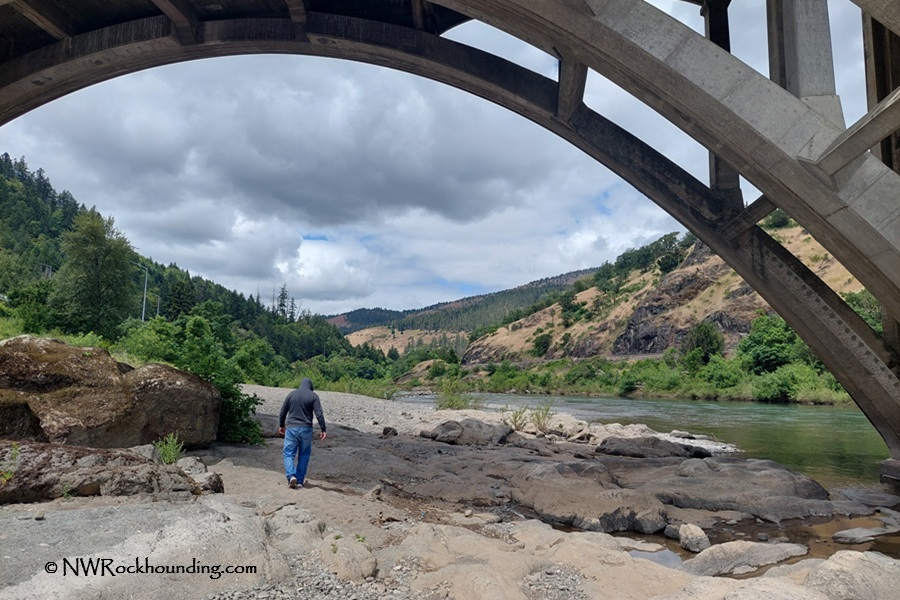
Rockhounding in rivers and creeks depends on who owns the surrounding land. Public access may be available on federal, state, or county land, and each type of land has its own rules for collecting.
The streambed and its banks are part of the managed property, so the land’s regulations protect rocks, gravel, and other materials in or along the water. When collecting is allowed, stick to surface materials, as digging or using motorized equipment in the streambed is generally prohibited.
In Oregon, you can remove up to five cubic yards of material per year from a single stream segment using non‑motorized methods without a state removal‑fill permit. Larger amounts or motorized removal generally require a permit.
County parks usually prohibit removing rocks or digging in the riverbed, as this is considered damaging park property. Streams designated as State Scenic Waterways or Essential Salmonid Habitat require a removal‑fill permit even for small amounts of material.
🔵 Regulations for all parks and recreational sites, managed by the state, counties, or cities can change over time. Always verify the most current rules with the appropriate agency before collecting.
Refference
Oregon.gov
oregon.public.law
Oregon Discovery