
Idaho offers amazing opportunities for finding rocks, minerals, and semi-precious stones. But before you head out, you need to know the rules.
Rockhounding regulations depend on who manages the land where you're collecting.
This guide covers rockhounding on land managed by Idaho state agencies and local governments. I'll explain the rules for State Endowment Trust Lands, Idaho Fish and Game access sites, state parks, city parks, and county parks.
Rules for federally managed lands, such as areas administered by the Bureau of Land Management or U.S. Forest Service, are covered in a separate article.

Idaho State Endowment Trust Lands
According to the Idaho Department of Lands, all state endowment trust lands are open to casual exploration for gemstones and mineral specimens. However, the land must not be under a valid exploration location or mineral lease.
This type of collecting is called "casual exploration." It must be small-scale and non-commercial. You may use simple hand tools, but heavy equipment, large excavations, or any commercial mining activity is not allowed without proper authorization.
Before collecting, confirm with the local IDL field office that the specific parcel is open and not under lease.
Idaho Fish and Game Access Sites
Certain river and lake access sites are managed by the Idaho Department of Fish and Game (IDFG). These areas support fishing, hunting, and public recreation.
The official rules prohibit disturbing or removing soils, gravel, or minerals unless you have specific authorization. According to IDAPA 13.01.03, no person may "disturb or remove any soils, gravel, or minerals" without permission from the Commission, Director, Regional Supervisor, or designee.
This means you cannot collect rocks, gems, or minerals for personal use on Idaho Fish and Game lands.
Idaho State Parks
The Idaho Department of Parks and Recreation manages Idaho State Parks. These parks protect scenic, recreational, and historic resources. They offer hiking, camping, boating, and other outdoor activities.
Even though rockhounding may be fine on trust lands, state parks are a separate class of state-managed land with their own rules. Most park regulations prohibit the removal of natural materials without a special permit. Check with the specific park before collecting anything.

Idaho Transportation Department
The Idaho Transportation Department manages highways, bridges, and road rights-of-way across the state. Rockhounding is generally not allowed within highway rights-of-way, bridge areas, borrow pits, or from riprap placed for erosion control.
These materials are part of public infrastructure and safety systems. Removing rock, gravel, or other materials without authorization is prohibited.
City Parks (Municipal Parks)
Local cities and towns throughout Idaho own city parks. Most city parks prohibit the removal of natural materials, including rocks and minerals.
A few riverside parks may allow casual collection along gravel bars. But this varies widely by city ordinance. Before you collect rocks in a city park, check with the local parks department to confirm what is permitted.
County Parks and Local Recreation Areas
County governments administer county parks. Regulations vary depending on the county.
Many county parks prohibit taking rocks or minerals from park property. Some undeveloped or rustic recreation areas allow casual rock collecting. However, this is always subject to county rules. Contact the relevant county parks department for specific guidance before you collect.
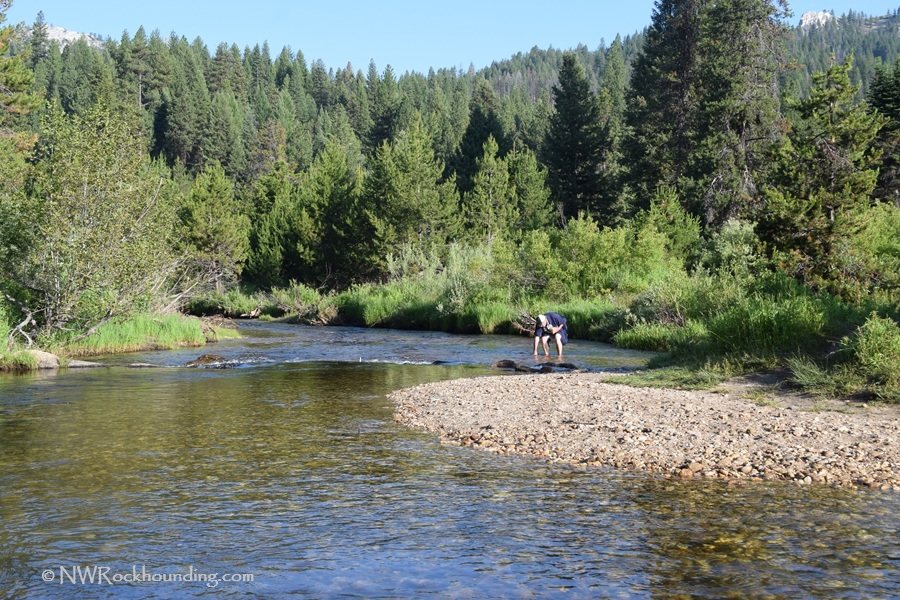
Rivers and Creeks
For rivers and creeks in Idaho, the rules depend on who manages the surrounding land.
If a river runs through an Idaho State Park or a wildlife management area, collecting rocks is usually prohibited. If it flows through Idaho State Endowment Trust Land managed by the Idaho Department of Lands, BLM land, or U.S. Forest Service land, casual rockhounding for personal use may be allowed. The land must not be under an active mineral lease or restricted area.
🔵 Local offices may also impose additional rules or different limits, so it’s best to confirm site-specific regulations before your visit.
Official References