
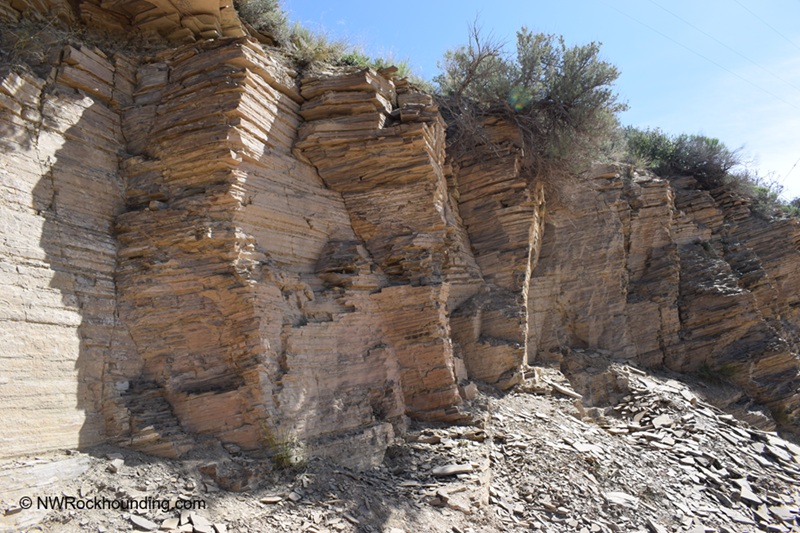
Located about 1.4 miles west of the town of Paris, a Paris Canyon site is one of southeastern Idaho's most accessible fossil-collecting destinations.
This scenic road cut exposes ancient shale and limestone in Bear Lake County, where Early Triassic ammonoid fossils (often referred to as Paris Canyon ammonites), along with molds, impressions, and pink calcite, can be found preserved in the rock layers.
The site sits on public land managed by the Bureau of Land Management (BLM–Pocatello), which allows recreational collecting with hand tools. No mining claim or permit is required.
Paris Canyon Geological History
During the Early Triassic period, about 249 to 247 million years ago, this part of Idaho was covered by a warm, shallow ocean.
Earth's continents were joined into a supercontinent called Pangea, and this region lay much closer to the tropics. That warm environment supported a rich marine ecosystem full of shelled creatures and early cephalopods.
Over time, mud, sand, and broken shells built up on the ocean floor and gradually turned into limestone and shale.
Several rock formations are exposed at the site, ranging in age from Cambrian to Permian. However, the fossil-bearing layers most collectors explore belong to younger Triassic deposits associated with the recovery period after the Permian–Triassic mass extinction.
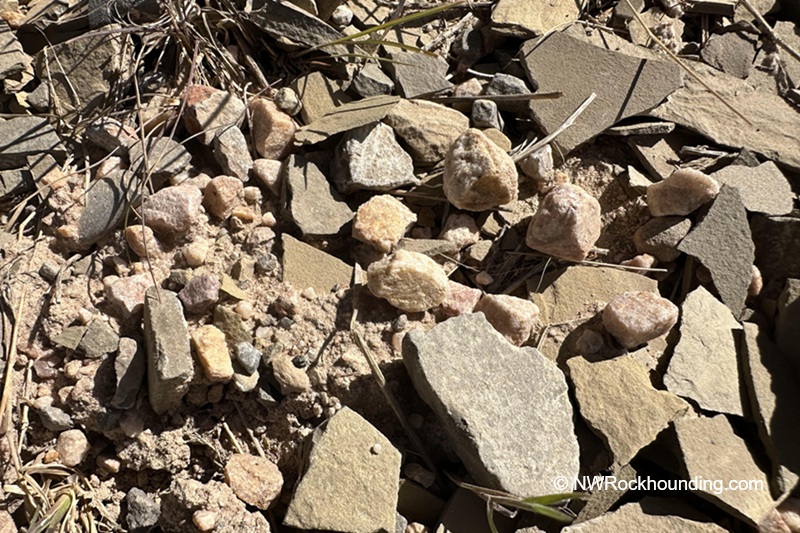
Together, these layers record a span of hundreds of millions of years.
Paris Canyon is especially important because it preserves evidence of life shortly after the Permian–Triassic mass extinction, the largest extinction event in Earth's history, which wiped out roughly 90 percent of all marine species.
The fossils here show how ocean life began to recover after that massive extinction. Today, tectonic forces have raised the ancient sea floor thousands of feet above sea level, and erosion has shaped it into the canyon you see now.
Paris Canyon Rockhounding
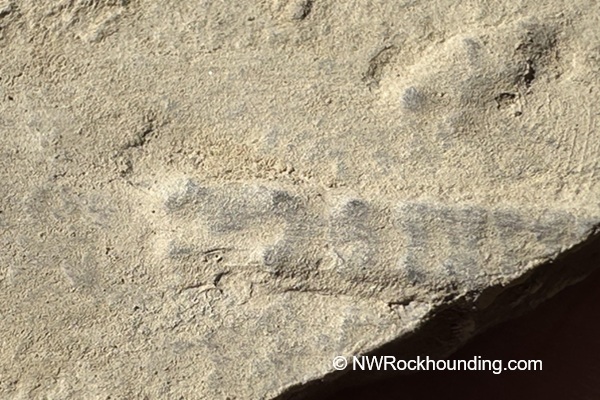
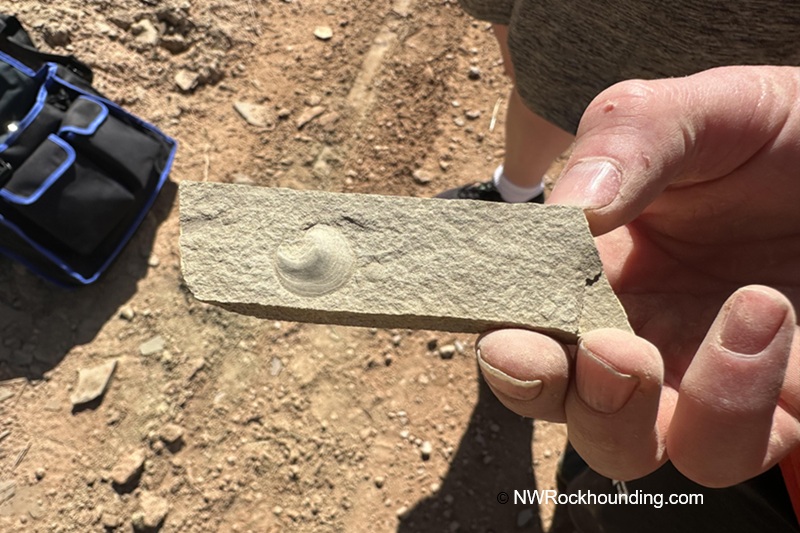
The main attraction here is Early Triassic ammonoid fossils (commonly called ammonites) — ancient coiled marine animals related to modern nautiluses. They are most often found as flattened shells, molds, or impressions in limestone and shale, and some show subtle ribs or growth lines that make each specimen slightly different.
The shale splits easily with simple hand tools. Bring a geology pick, fine-point chisels, safety glasses, a small brush, and newspaper or bubble wrap to protect fragile fossils on the ride home.
Most of what you'll find are molds and impressions rather than complete specimens. Finding an entire ammonite is rare, but it does happen.
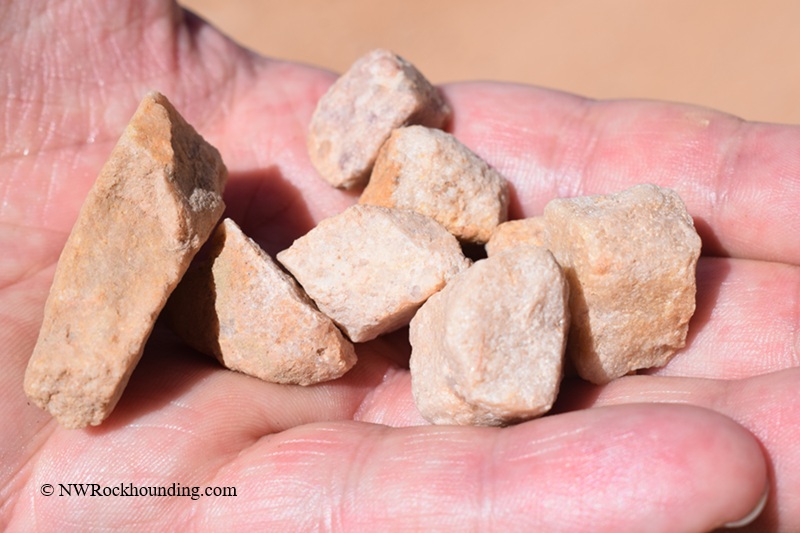
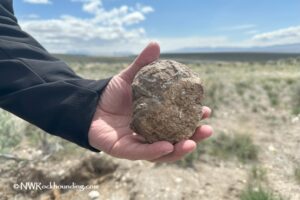
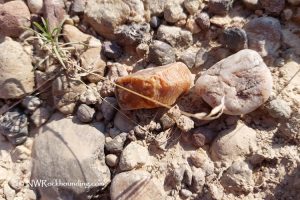
Besides ammonites, collectors also find pink calcite at this site. It occurs as veins and small pockets within the surrounding rock and can also appear on the surface, adding a bright pink contrast to the surrounding stone.
Success here comes down to patience. Split plenty of rock and check both sides of each piece. The best fossils often hide on the back side and are easy to miss if you rush. Focus on the lighter shale, where impressions are more visible.
Best time to collect: Spring through fall offers the best conditions. The site sits at an elevation of 6,100 feet, so that mornings can be cool even in July. By late spring, the gravel road is typically clear of snow.
Things to Do Near Paris Canyon: Beyond the Fossils
Minnetonka Cave is located about 10 miles west of St. Charles along a scenic forest road. This impressive limestone cave features stalactites, stalagmites, and banded travertine.
The guided tour takes you through half a mile of underground passages with more than 90 steps. The cave stays around 40°F inside year-round, so bring a jacket. It's typically open from June through September.
Bear Lake stretches roughly 20 miles long and 7 miles wide across the Idaho–Utah border. Often called the "Caribbean of the Rockies" because of its turquoise-blue water, Bear Lake is popular for swimming, kayaking, fishing, and boating.
The lake's unusual color comes from suspended microscite particles in the water. In summer, the area is famous for its wild raspberry harvest, and you'll find raspberry shakes at nearly every shop in Garden City, Utah.
The Bear Lake National Wildlife Refuge covers approximately 18,000 acres of wetland and marsh habitat north of the lake - an excellent spot for birding, especially during spring and fall migration.
The town of Paris is worth a stop for the historic Paris Tabernacle, built between 1884 and 1889 from locally quarried red sandstone.
If you want to relax after exploring geological treasures, consider visiting nearby one of the nearby hot springs such as Epic Hot Springs, 15 miles southeast or Maple Grove Hot Springs, about 50 miles west.
Paris Canyon Rockhounding | Facts
Material: Ammonoid fossils, molds, impressions, pink calcite, shale, limestone
Tools: Geology pick, fine-point chisels, safety glasses, brush, wrapping material
Land type: High-desert hills with exposed road cuts
Best time to visit: Spring through fall
Land manager: Bureau of Land Management (BLM-Pocatello)
Fees: None
Location: Bear Lake County • Idaho • USA
Road access: Any vehicle
Paris Canyon Camping and Lodging
Paris Spring Campground offers a quiet, forested setting just a few miles from town with fire rings, picnic tables, and vault toilets. Sites are first-come, first-served, so arrive early during summer weekends.
St. Charles Canyon Campground is another option, tucked into a scenic canyon south of Paris along the road to Minnetonka Cave with easy access to hiking trails and cave tours.
For dispersed camping, BLM land surrounds much of the Paris Canyon area. Check current regulations with the BLM-Pocatello office before choosing a spot, and remember to pack out all trash.
If you prefer more comfortable accommodations, most lodging options are concentrated around Garden City, Utah, and Fish Haven, Idaho, roughly 20 to 30 minutes south of Paris. The town of Montpelier, Idaho, about 15 miles north, also offers motels and restaurants.
For more comfortable accommodations with hot spring soaking included, consider Bear River Hot Springs. Nearby, the towns of Brookfield and Montpelier also offer a range of lodging options.
You May Also Like





Paris Canyon Access and Directions
From Interstate 5,
- Take US-89 north through Logan, Utah, and continue into Idaho through Bear Lake's west shore communities
- Follow US-89 to the town of Paris
- From Paris, turn west onto West Second Street, which becomes Paris Canyon Road. There is a sign at the turn
- Drive 1.4 miles west along the gravel road to reach the site.
The road cut is extensive and easy to spot on both sides of the road.